
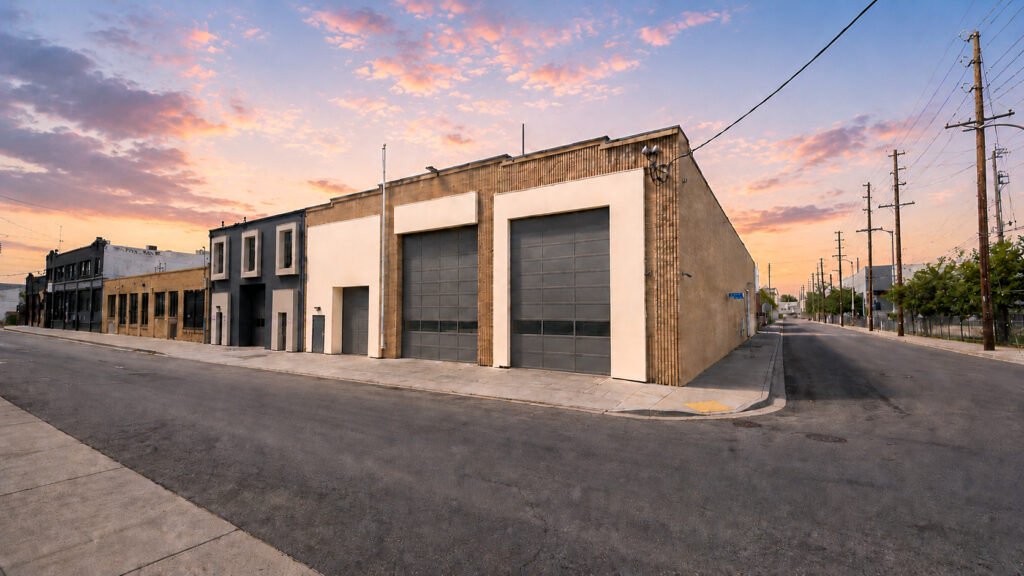
Buying warehouse property in Los Angeles is a different process than buying in most other markets. Industrial land is limited, demand from logistics, manufacturing, and e-commerce operations is persistent, and the right building in the right submarket can be difficult to source without knowing where to look. Whether you’re an owner-user looking to control your own space or an investor evaluating industrial assets, understanding how to find and evaluate warehouses for sale in Los Angeles is the foundation of making a sound decision.
Why Warehouse Properties in Los Angeles Are in Demand
Los Angeles sits at the center of one of the most active industrial real estate markets in the country, and the reasons aren’t difficult to understand. The Ports of Los Angeles and Long Beach together form the busiest port complex in North America, handling roughly 40 percent of all containerized imports entering the United States. That volume creates sustained demand for distribution space throughout the greater LA basin from logistics operators, importers, third-party logistics providers, and last-mile delivery companies.
Beyond the ports, the region’s freeway network and population density make it a critical hub for e-commerce fulfillment and regional distribution. Companies that need to reach Southern California consumers quickly need warehouse space within the LA basin, and the supply of industrial-zoned land hasn’t kept pace with that demand for decades. Vacancy rates in many LA industrial submarkets consistently run in the low single digits, which keeps purchase prices elevated and reinforces the long-term investment case for industrial ownership in the region.
The Insider’s Guide To Leasing Commercial Space In Los Angeles (Free Guide)
What to Consider Before Buying a Warehouse in Los Angeles
The features that determine whether a warehouse actually works for your operation are specific, and a building that looks right on paper can fall short in ways that aren’t obvious until you’re inside it. These are the factors worth evaluating before you make an offer.
Location and Freeway Access
For most warehouse users, proximity to freeways is as important as the building itself. Access to the 710, 405, 5, 10, and 110 corridors directly affects how efficiently product moves in and out of the facility. Distance from the ports matters for importers and freight handlers. Labor availability, which is directly tied to location, affects whether you can staff a facility without unsustainable commute times. The right location depends on your specific operational model, but it’s rarely interchangeable.
Building Size and Layout
Clear height is one of the first specs to confirm. Modern logistics operations typically require 24 to 32 feet of clear height for racking and efficient vertical storage. Older industrial buildings in Los Angeles often come in below that threshold, which can limit operational efficiency even when the square footage looks adequate. Column spacing, the ratio of warehouse to office space, and the overall flow of the building from receiving to storage to shipping all affect how well the space functions for day-to-day operations.
Loading and Parking
Dock-high loading doors, the number and placement of grade-level doors, and the depth of the truck court all determine how the facility handles freight. A building with insufficient dock positions or a shallow truck court can create congestion that costs real money in operational delays. Parking for employees and visitors, and the ability to accommodate the types of vehicles your operation uses, should be confirmed against your actual requirements before you get too far into the evaluation process.
Zoning and Permitted Use
Not every industrially-zoned property in Los Angeles supports every type of use. Heavy manufacturing, food production, certain storage and distribution uses, and properties that generate significant truck traffic each come with specific zoning and permitting considerations. Confirming that a property’s zoning classification supports your intended use, and that there are no conditional use permit requirements that could delay or complicate your plans, is a necessary step before moving forward.
Power, HVAC, and Building Condition
Electrical capacity is increasingly important for operations that run automated equipment, EV charging, refrigeration, or high-volume lighting. Older buildings may need significant panel upgrades to support modern industrial operations. Roof condition, fire sprinkler coverage, and deferred maintenance items all translate into capital expenditure estimates that should be factored into your offer price. An industrial property inspection is not optional on a warehouse acquisition in Los Angeles.
The Insider’s Guide To Leasing Commercial Space In Los Angeles (Free Guide)
Los Angeles Areas Worth Evaluating for Warehouse Properties
The right submarket depends on your logistics needs, budget, and operational footprint. Common areas buyers evaluate include:
Vernon and Commerce are among the most established industrial corridors in the region, with dense concentrations of manufacturing and distribution facilities and direct access to major freight routes.
South Los Angeles offers industrial inventory at price points that have historically run below the Westside and central submarkets, with reasonable freeway access for regional distribution.
Inglewood and Hawthorne provide Westside-adjacent industrial options for operations that need to serve the coastal population centers without paying Westside commercial prices.
The El Segundo and LAX area generates consistent demand from airport-adjacent logistics, aerospace, and distribution operations. Inventory is limited and prices reflect that.
The San Fernando Valley offers larger footprints and regional freeway access for operations that need more square footage than central LA submarkets typically provide at comparable price points.
Long Beach sits at the port and remains one of the most logistics-relevant industrial markets in Southern California, with inventory that attracts import-dependent businesses and third-party logistics operators.
Each submarket has its own pricing dynamics, vacancy characteristics, and inventory profile. Understanding which one actually fits your operational and financial criteria requires current market data, not just a map.
Warehouse for Sale vs. Warehouse for Lease: Which Is Better?
The decision to buy or lease warehouse space in Los Angeles follows similar logic to any commercial real estate buy-versus-lease analysis, but industrial property has its own set of considerations. Our guide to buying versus leasing commercial space covers the financial framework in depth, but the core distinction is straightforward:
Buying makes more sense when you have a long time horizon, a stable operational footprint, and the capital to execute an acquisition without impairing the business. It gives you control over the space, the buildout, and your occupancy cost structure over time. Industrial property in Los Angeles has historically appreciated, and owner-users who bought a decade ago have generally built significant equity alongside their business.
Leasing preserves flexibility and capital. For businesses in a growth phase, whose space needs are likely to change, or who need their capital deployed into operations rather than real estate, leasing is often the more defensible short-term choice. The tradeoff is exposure to rent increases at renewal and the absence of equity accumulation.
The Insider’s Guide To Leasing Commercial Space In Los Angeles (Free Guide)
How a Commercial Real Estate Broker Helps Buyers Find Warehouse Properties
Most warehouse acquisitions in Los Angeles involve off-market or lightly marketed properties that never reach public listing platforms. Owner-users and investors who sell their industrial properties often do so quietly, through broker relationships rather than broad marketing campaigns. Working with a broker who has active relationships in the specific submarkets you’re evaluating gives you access to that inventory, not just what appears on CoStar or LoopNet.
Beyond sourcing, a commercial broker helps with pricing analysis against recent comparable sales, zoning and use review, negotiation strategy, due diligence coordination, and investment or owner-user financial analysis. Industrial property transactions have specific considerations that differ from office or retail acquisitions, and working with someone who understands those distinctions is worth considerably more than their commission. Browse our current listings to see available commercial and industrial properties across the Los Angeles market, and explore our services to understand how we support buyers through every stage of the acquisition process.
Questions to Ask Before Buying a Warehouse in Los Angeles
Before you make an offer on any warehouse property, these are the questions worth having clear answers to:
- Is the property zoned for my intended use, and are there any conditional use restrictions?
- Is the clear height sufficient for my storage or operational requirements?
- How many dock-high and grade-level loading doors does the building have?
- Is the truck court deep enough for the vehicles my operation uses?
- What is the electrical capacity, and will it support my equipment?
- What deferred maintenance items are present, and what will they cost?
- Are there environmental concerns or prior uses that require disclosure or remediation?
- How does the asking price compare to recent warehouse sales in the same submarket?
- What are the property taxes and estimated operating expenses as an owner?
- Is this property better suited for owner-use, investment, or both?
The Insider’s Guide To Leasing Commercial Space In Los Angeles (Free Guide)
FAQs About Warehouses for Sale in Los Angeles
How do I find warehouses for sale in Los Angeles?
The most reliable approach is working with a commercial real estate broker who has active relationships in the industrial submarkets you’re targeting. Many of the best opportunities are off-market or lightly marketed. Supplement that with a review of available listings and a clear picture of your location, size, and building spec requirements before you start touring.
What should I look for when buying a warehouse in Los Angeles?
Clear height, loading dock configuration, truck court depth, zoning, electrical capacity, and building condition are the primary operational factors. Location relative to freeways, the ports, your customers, and your labor pool is equally important and harder to change after the fact.
Is it better to buy or lease warehouse space in Los Angeles?
Buying typically favors businesses with a long time horizon, stable space requirements, and the capital to execute without constraining operations. Leasing favors flexibility and preserves capital for businesses still scaling. The right answer depends on your specific financial position and operational outlook.
What areas of Los Angeles have the most warehouse inventory?
Vernon, Commerce, South Los Angeles, the San Fernando Valley, and the Long Beach/port corridor have the most concentrated industrial inventory. Specific availability and pricing vary significantly by submarket and building type.
Do I need a broker to buy warehouse property in Los Angeles?
You don’t need one, but working without representation puts you at a meaningful disadvantage in a market where landlord and seller brokers are experienced and motivated. A buyer’s broker costs you nothing in most transactions (commissions are paid by the seller) and gives you access to market data, off-market opportunities, and negotiation support that’s difficult to replicate independently.
Ready to Find a Warehouse for Sale in Los Angeles?
Whether you’re evaluating your first industrial acquisition or adding to an existing portfolio, finding the right warehouse property in Los Angeles takes current market knowledge, submarket-specific experience, and access to inventory that doesn’t always make it to public platforms.
At Lee West LA, our team works with owner-users and investors to identify warehouse and industrial properties across the Los Angeles market, evaluate them against your operational and financial criteria, and negotiate acquisitions that reflect what properties are actually worth. Reach out to us to start the conversation about what you’re looking for and where we can help.


